




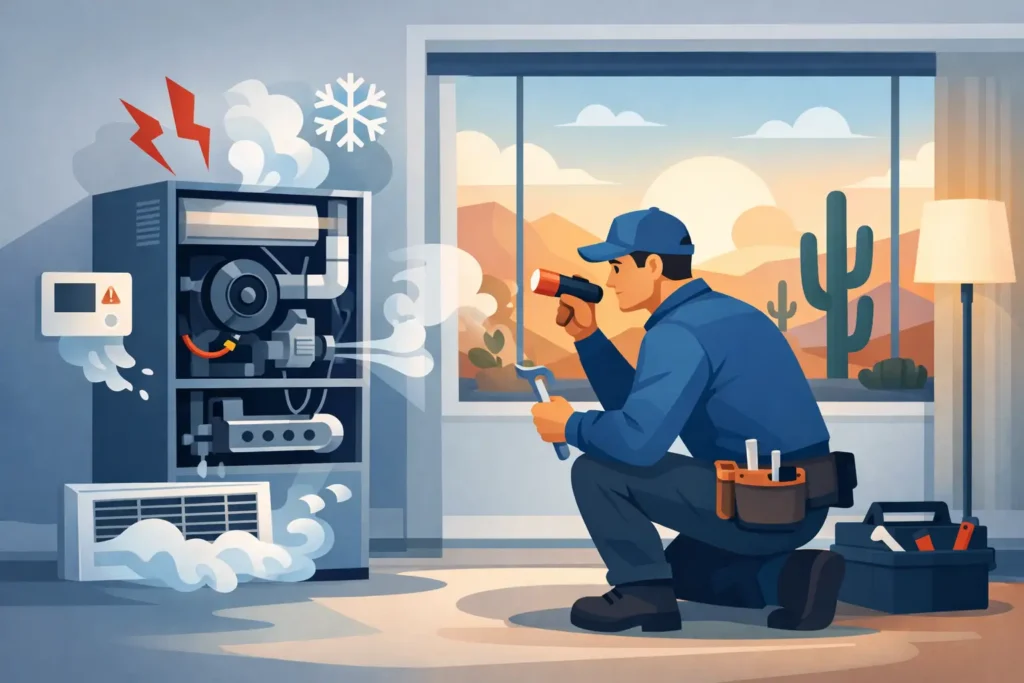
A Tucson winter night may not look like a Midwest blizzard, but a house without heat can get uncomfortable fast. When you need furnace repair in Tucson, the goal is not just to get warm again. It is to understand what failed, make a safe decision, and avoid paying for work your system does not actually need.
A furnace that will not start, blows cool air, cycles constantly, or makes a new noise deserves attention. Some problems have simple causes, such as a clogged filter or tripped breaker. Others involve ignition components, electrical connections, airflow restrictions, or safety controls that should only be handled by a trained HVAC technician. Knowing the difference can help you act quickly without guessing.
When Furnace Repair in Tucson Cannot Wait
Some heating problems can wait for a regular appointment. Others should be treated as urgent, especially if they affect safety, health, or a business’s ability to operate comfortably.
If you smell gas, notice a burning odor that does not fade shortly after startup, hear a loud bang, or see soot around the furnace, turn the system off if it is safe to do so. Leave the area if you suspect a gas leak, and contact the appropriate emergency utility service before arranging HVAC repair. Do not keep restarting the furnace to see if the issue goes away.
A complete loss of heat also calls for prompt service when temperatures drop, particularly for households with young children, older adults, or anyone with health concerns. For local businesses, a failed heating system can affect employees, customers, equipment, and tenant comfort. A fast diagnosis helps prevent a small part failure from becoming a longer interruption.
It also matters what kind of system you have. Many Tucson homes use heat pumps rather than traditional gas furnaces. A heat pump that is not heating needs a similar level of professional attention, but the repair path can be different. An honest technician should identify the equipment first and explain the actual issue in plain language.
Common Signs Your Furnace Needs Service
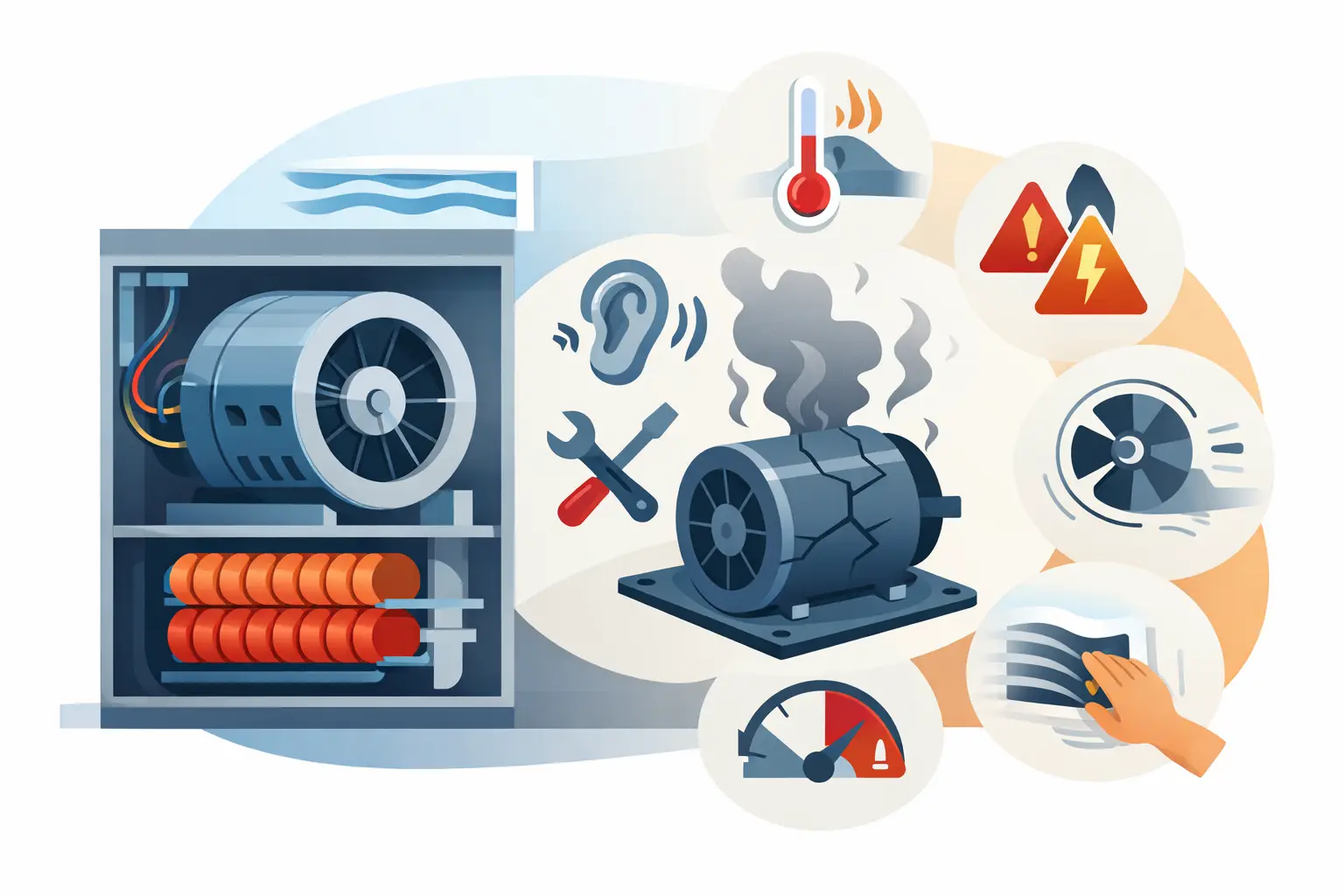
Heating equipment rarely fails without giving some warning. Pay attention when performance changes from one season to the next. These signs are especially worth a service call:
- The furnace runs but the air coming from the vents is cool or barely warm.
- The system starts and stops repeatedly without bringing the home to the thermostat setting.
- Some rooms are comfortable while others stay noticeably cold.
- You hear rattling, squealing, grinding, banging, or a blower that sounds louder than normal.
- Your energy bill rises even though your heating habits have not changed.
- The furnace needs frequent thermostat adjustments or takes much longer than usual to heat the house.
Not every symptom means the furnace is near the end of its life. A dirty filter can restrict airflow and cause overheating or short cycling. A thermostat issue can look like a furnace problem. A worn capacitor, igniter, flame sensor, blower motor, or limit switch may be repairable without replacing the whole unit.
That is why a diagnosis matters more than a quick sales pitch. The right question is not simply, Is the system old? It is, What is causing this specific problem, what repair will correct it, and what condition is the rest of the equipment in?
Safe Checks to Make Before You Call
There are a few basic checks homeowners and property managers can make without opening the furnace cabinet or handling wiring. First, confirm the thermostat is set to Heat and that its temperature setting is higher than the current room temperature. If it uses batteries, replace them if the display is dim or unresponsive.
Next, check the air filter. A filter that looks gray, packed with dust, or visibly bent should be replaced. Tucson’s dust can load filters faster than many people expect, and a clean filter supports airflow in both heating and cooling season. Be sure the replacement is the correct size and installed in the direction shown on the frame.
Then look at the electrical panel for a tripped HVAC breaker. If the breaker has tripped once, reset it once. If it trips again, leave it alone and call for service. Repeated trips can point to an electrical or mechanical issue that needs professional testing.
Avoid repeatedly turning the thermostat off and on, removing access panels, or trying to bypass a safety switch. Those steps may create more damage or hide useful clues for the technician. Write down what you noticed instead: when the problem began, which sounds or smells occurred, whether the unit runs at all, and whether the issue affects the whole building or only certain areas.
Repair or Replace? The Answer Depends on More Than Age
A furnace that needs repair is not automatically a furnace that needs replacement. Equipment age is part of the picture, but it should not be the only factor. A well-maintained system with a straightforward repair may have years of useful service remaining. Replacing it too early can cost far more than necessary.
Replacement becomes more reasonable when repairs are frequent, a major component has failed, efficiency has fallen sharply, or the system is no longer sized or configured well for the building. Availability of replacement parts also matters. For older equipment, an otherwise modest repair may be less attractive if the part is hard to source or if another major repair is likely soon.
For Tucson property owners, it is also smart to consider the whole HVAC system. If a furnace shares equipment or ductwork with an aging air conditioner, a replacement decision should account for summer cooling needs as well. Our climate puts far more demand on cooling than heating, so the best long-term investment may depend on how the entire system performs through the year.
A trustworthy recommendation should include options. You should know the estimated repair cost, what the repair is expected to accomplish, any concerns the technician sees, and why replacement may or may not make financial sense. If a recommendation is expensive or unclear, a second opinion is reasonable.
What a Clear Heating Diagnosis Should Include
Good furnace repair is not just about replacing a part. It starts with listening to the customer, checking the system safely, and testing the components connected to the complaint. The technician should inspect airflow, thermostat operation, electrical connections, ignition or heating sequence, safety controls, and visible signs of wear where appropriate.
Afterward, you should receive a straightforward explanation. You do not need a confusing technical lecture, but you do deserve to understand what failed and what work is recommended. Ask whether the repair is necessary now, whether there are alternatives, and whether any maintenance could reduce the chance of another issue.
Best Choice Heating & Cooling LLC approaches service with that practical standard: identify the real problem, explain the options clearly, and help Tucson homeowners and businesses choose a repair that fits their system and budget. When heat is out after hours, emergency support can also make the difference between waiting in discomfort and getting a safe solution sooner.
Protect Your Furnace Between Service Calls
The most useful preventive step is regular filter replacement. The right schedule depends on filter type, pets, dust levels, occupancy, and how often the system runs, but checking it monthly is a good habit. Do not wait until the filter is visibly clogged.
Seasonal maintenance is also worthwhile before heating demand picks up. A professional tune-up can catch worn components, airflow problems, loose electrical connections, and safety concerns before they lead to a no-heat call. For commercial properties, planned maintenance is especially valuable because it helps reduce unexpected disruptions during operating hours.
Keep supply vents open and unobstructed, keep the area around indoor equipment clear, and pay attention to changes in noise or performance. Small details reported early often make diagnosis faster and repairs more manageable.
When your heat is unreliable, do not let uncertainty turn into a larger problem. A clear, timely furnace diagnosis gives you the information to protect your comfort, your budget, and the people who depend on your space.